Description
What is Manual Honey Extractor?
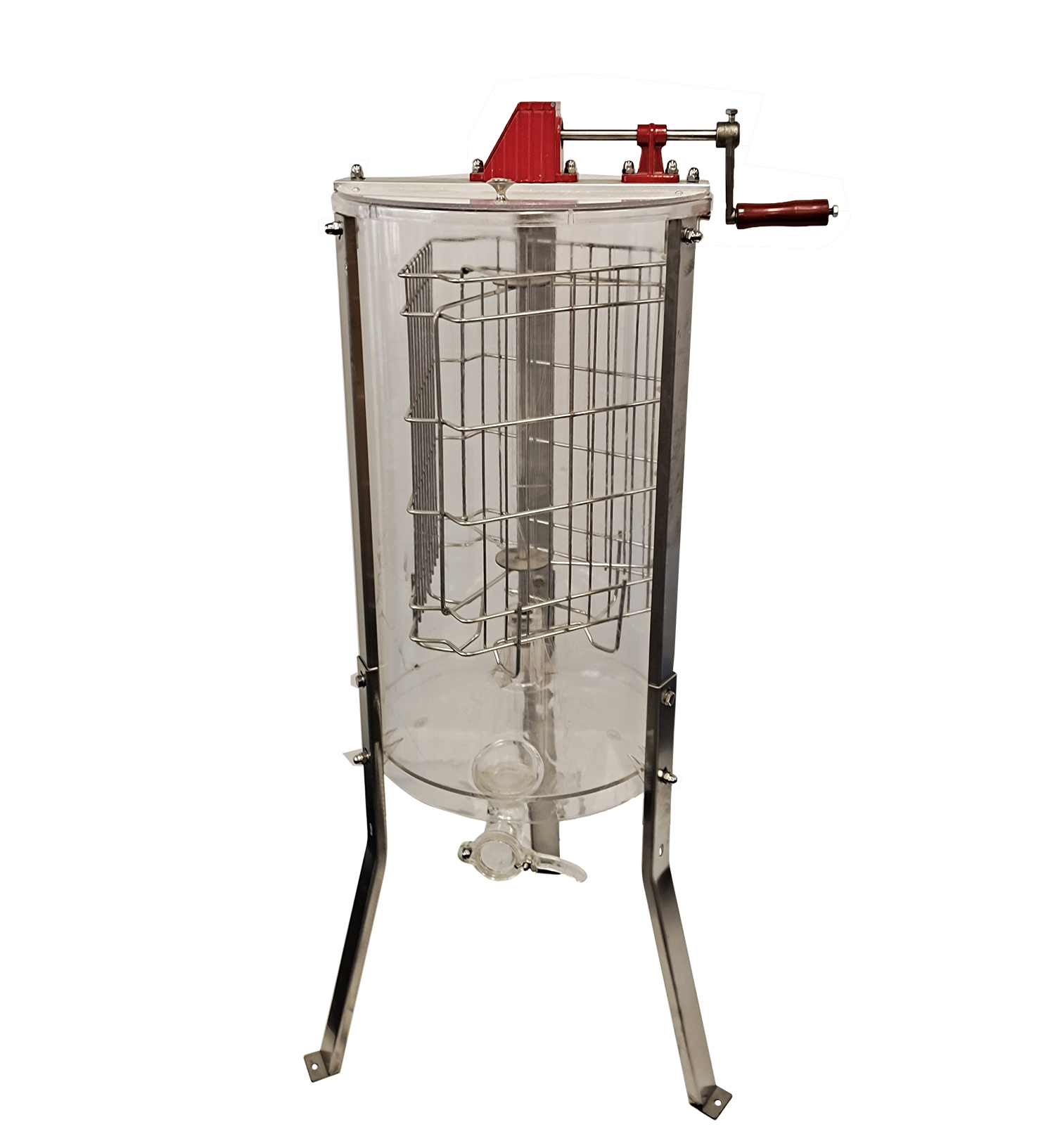
Beekeepers use manual honey extractor to extract honey from honeycomb frames without damaging the comb. This process is done by centrifugal force, place the frames in a container, and the beekeeper manually turns a handle to spin the frames, forcing the honey out of the comb and collecting it at the bottom of the extractor. Here’s a brief overview of how it works and some key points:
Components:
Drum or Tank: The outer container that holds the frames and collects the honey.
Frames Basket: A rotating basket that holds the honeycomb frames.
Crank Handle: A handle that the beekeeper turns to spin the frames.
Honey Gate: A valve at the bottom of the drum to release the extracted honey.
Steps to Use:
Preparation: Uncap the honeycomb cells using an uncapping knife or fork.
Loading: Place the uncapped frames into the basket inside the extractor.
Spinning: Turn the crank handle to spin the frames. Start slowly to avoid breaking the comb and gradually increase the speed.
Collecting Honey: Once spun out the honey, it will collect at the bottom of the drum. Open the honey gate to pour the honey into a container.
Cleaning: Clean the extractor after use to maintain hygiene and prevent contamination.
Advantages:
Preserves Comb: Allows beekeepers to reuse the comb, saving bees the energy of building new comb.
Cost-Effective: Manual honey extractors are generally cheaper than electric ones.
Control: Beekeepers have full control over the extraction speed and process.
Considerations:
Effort: Manual extractor requires physical effort, which can be tiring if extracting large quantities.
Speed: Manual honey extractor is slower compared to electric extractors, making it less efficient for large-scale operations.



Reviews
There are no reviews yet.