Description
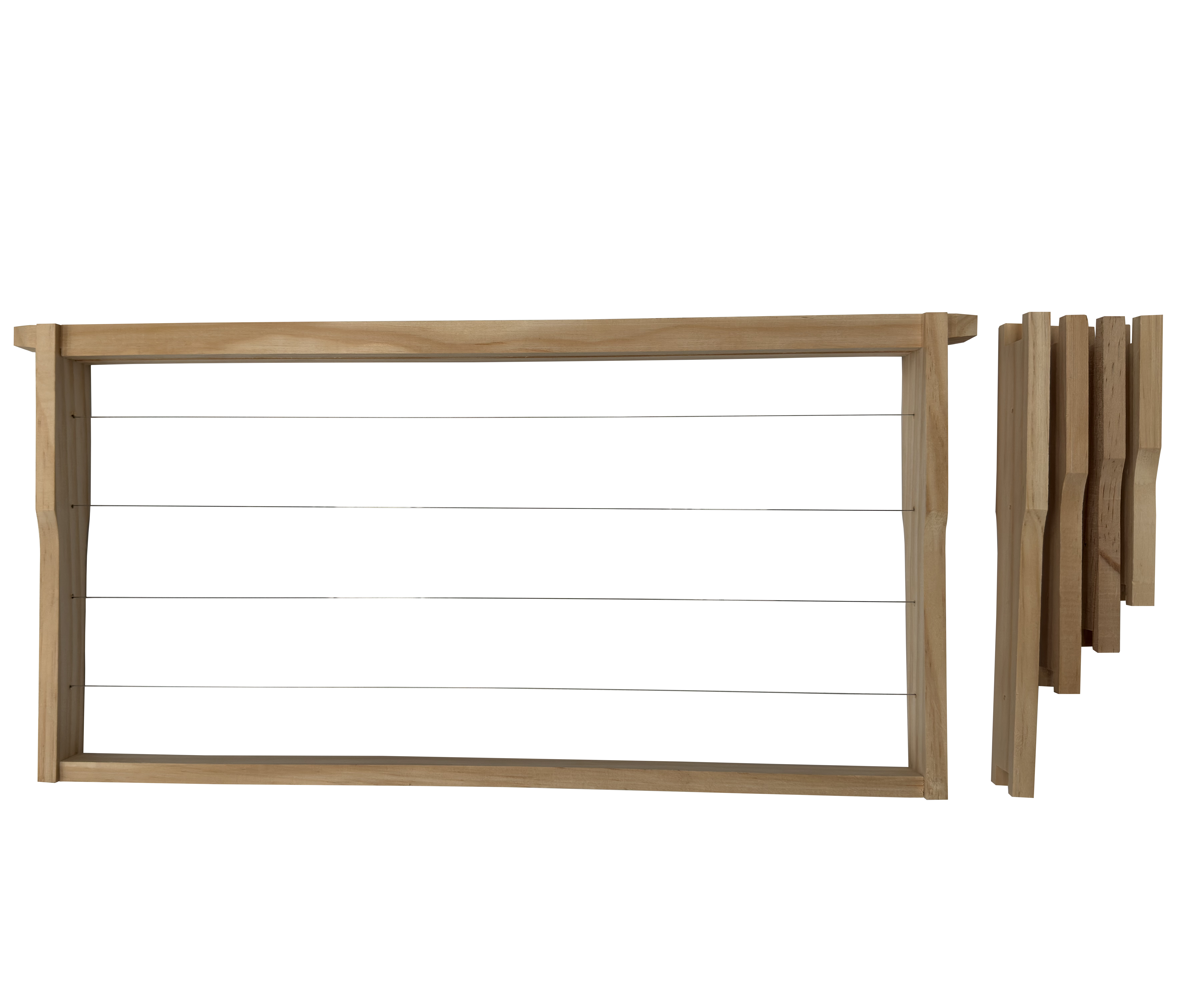
A wooden hive frame is a foundational component of modern beehives used in beekeeping.
1. **Material**:
Using untreated or lightly treated wood to make hive frame, such as pine or cedar. They are durability, resistance to weathering, and suitability for bees.
2. **Construction**: A typical wooden hive frame consists of several parts:
– **Top Bar**: The uppermost horizontal piece of the frame, often wider than the rest of the frame, providing a gripping surface for handling.
– **Side Bars**: Vertical pieces that form the sides of the frame, connecting the top bar to the bottom bar.
– **Bottom Bar**: The lower horizontal piece that completes the frame structure and supports the foundation or comb.
3. **Foundation**:
Wooden frames can either support beeswax foundation sheets, plastic foundation sheets or allow bees to build their own natural comb. Frames designed for foundation have a groove along the top bar to hold the foundation securely.
4. **Size**:
Hive frames come in standard sizes to fit different hive configurations, such as Langstroth hives or other hive types used globally in beekeeping. Common dimensions include depths of 9 1/8 inches for brood frames and 6 1/4 inches for honey frames in Langstroth hives.
5. **Function**:
The primary function of a wooden hive frame is to provide structural support for the honeycomb where bees build and store honey, pollen, and brood (eggs, larvae, and pupae). Frames are removable, allowing beekeepers to inspect and manage colonies efficiently.
6. **Assembly**:
Assembled Wooden frames using nails or staples to secure the joints. Some frames may also feature pre-drilled holes for assembly or additional reinforcement.
7. **Maintenance**:
Wooden hive frames require periodic inspection and maintenance to ensure they remain sturdy and free from damage. Clean the propolis (a resinous substance bees use to seal gaps) and excess wax off frames during hive inspections.
8. **Advantages**:
Wooden frames provide a natural and stable structure for bees to build comb, and they are generally well-accepted by bees. They are durable, reusable, and provide a familiar environment for colony development.
In summary, a wooden hive frame is a key component of beehives, essential for colony health and honey production in beekeeping. Its design and materials support efficient management practices while providing a natural and secure habitat for honeybees.




Reviews
There are no reviews yet.