Description
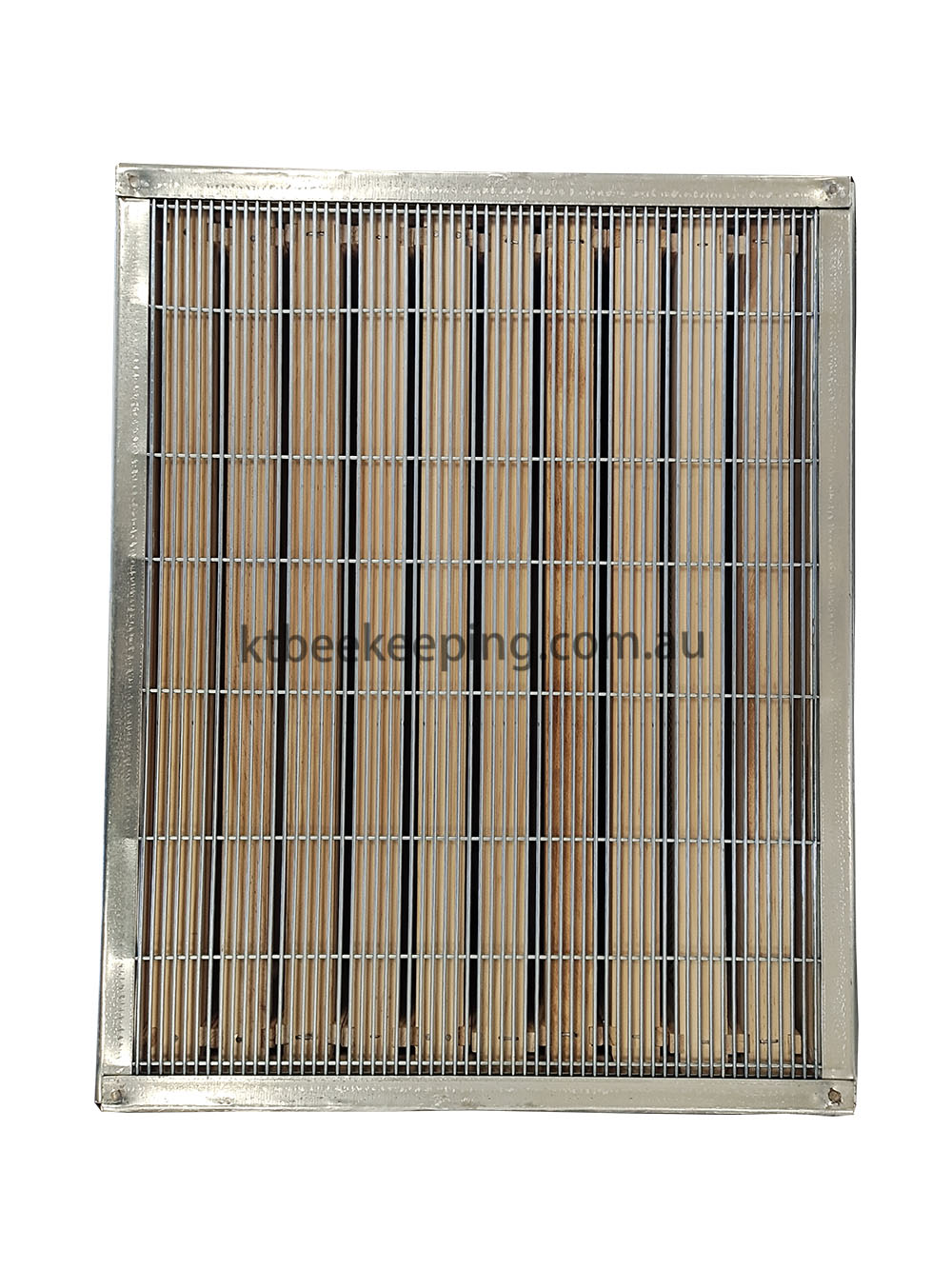
Beekeepers use metal queen excluders to control queen bee activity in the hive. It typically consists of a wire grid spaced closely enough to allow worker bees to pass through, but not for the larger queen bee. The purpose of a queen excluder is to confine the queen to certain parts of the hive, usually the brood box or lower box, while preventing her from entering the honey super where store excess honey.
Here are some key features and aspects of a metal queen excluder:
1. **Material**: Made from stainless steel or galvanized steel. This makes the excluder durable and resistant to corrosion.
2. **Design**: The excluder has a grid pattern with gaps typically ranging from 4 to 4.25 mm wide, which allows worker bees to pass through but restricts the movement of the queen bee.
3. **Size**: Queen excluders are fitting standard hive dimensions, such as Langstroth hives or other hive types commonly used in beekeeping.
4. **Placement**: Place the queen excluder between the brood box (where the queen lays her eggs) and the honey super (where the honey is stored). This placement ensures that the queen bee does not lay eggs in the honey super, making the honey cleaner and easier to harvest.
5. **Function**: Prevents the queen from moving freely throughout the hive, thus helping beekeepers manage the distribution of brood and honey production within the hive.
6. **Maintenance**: Metal queen excluders are relatively easy to clean and maintain.
In summary, a metal queen excluder is an essential tool in modern beekeeping practices, aiding in hive management and honey production by restricting the queen bee’s access to certain areas of the hive.




Reviews
There are no reviews yet.